Note
This page is a reference documentation. It only explains the function signature, and not how to use it. Please refer to the user guide for the big picture.
nilearn.datasets.fetch_localizer_first_level
- nilearn.datasets.fetch_localizer_first_level(data_dir=None, verbose=1)[source]
Download a first-level localizer fMRI dataset.
For more information see the dataset description.
- Parameters:
- data_dir
pathlib.Pathorstror None, optional Path where data should be downloaded. By default, files are downloaded in a
nilearn_datafolder in the home directory of the user. See alsonilearn.datasets.utils.get_data_dirs.- verbose
boolorint, default=1 Verbosity level (
0orFalsemeans no message).
- data_dir
- Returns:
- data
sklearn.utils.Bunch Dictionary-like object, with the keys:
epi_img: the input 4D image
events: a csv file describing the paradigm
description: data description
t_r: repetition time of the function data in seconds
- slice_time_ref:
slice timing reference used during slice timing correction
- ‘template’
str The standardized space of analysis in which the atlas results are provided. When known it should be a valid template name taken from the spaces described in the BIDS specification.
- ‘template’
- data
Notes
If the dataset files are already present in the user’s Nilearn data directory, this fetcher will not re-download them. To force a fresh download, you can remove the existing dataset folder from your local Nilearn data directory.
For more details on how Nilearn stores datasets.
Examples using nilearn.datasets.fetch_localizer_first_level
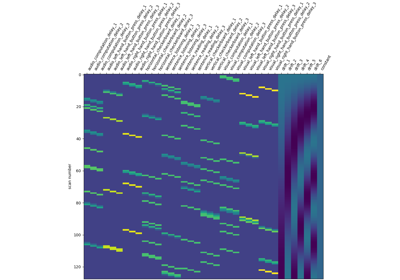
Analysis of an fMRI dataset with a Finite Impulse Response (FIR) model